Varroa Management: When to Test, When to Treat, and How to Track Results
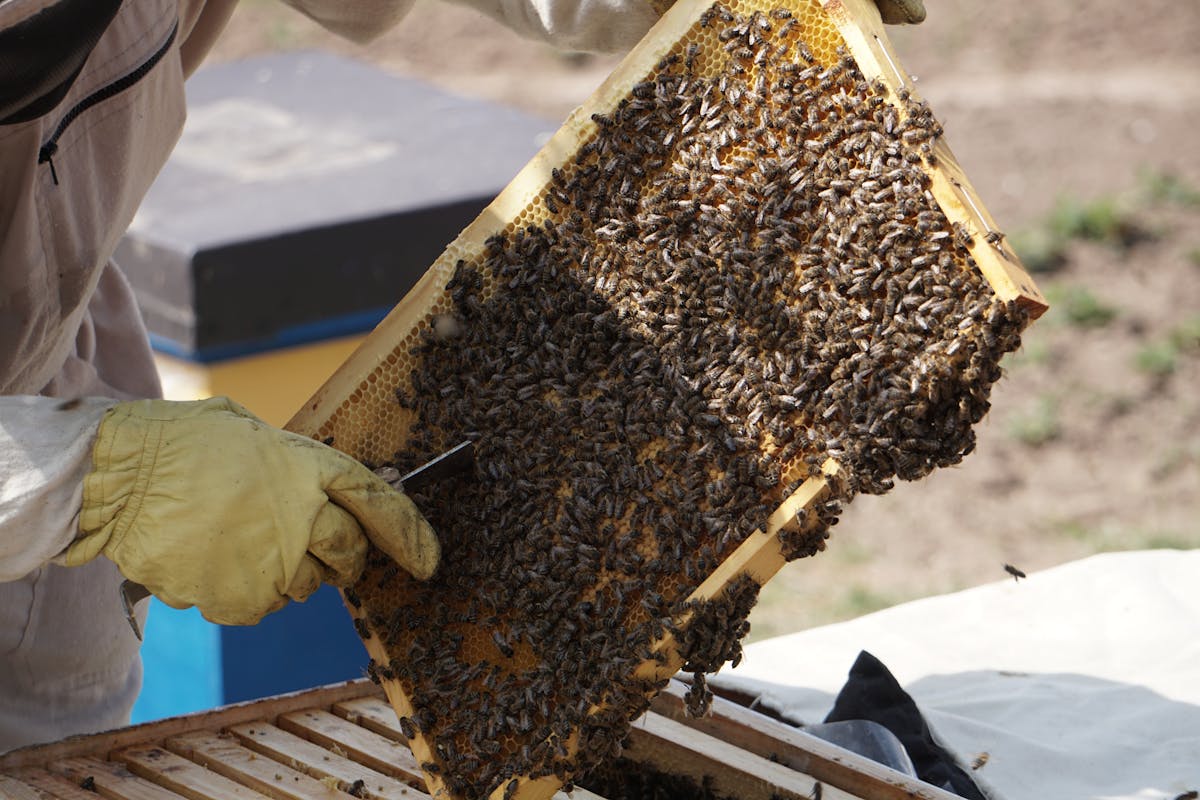
If there's one thing that separates successful beekeepers from those who lose colonies every year, it's varroa management. Varroa destructor mites are the single greatest threat to managed honey bee colonies worldwide. They weaken bees, transmit viruses like Deformed Wing Virus, and if left unchecked, will collapse even the strongest colony — usually right when you need it most, heading into winter.
The challenge isn't that varroa is complicated. It's that managing varroa requires consistency: testing at the right times, treating at the right thresholds, and tracking results so you know what's actually working. Here's how to build a varroa management program that keeps your colonies alive.
Why Varroa Matters More Than Anything Else
Varroa mites don't just feed on bees — they're virus vectors. A mite feeding on a developing pupa transmits Deformed Wing Virus, Acute Bee Paralysis Virus, and other pathogens directly into the bee's body. High mite loads don't kill colonies through parasitism alone; they destroy colonies by creating an epidemic of viral disease that the bees can't recover from.
This is why a colony can look "fine" in August and be dead by October. The mites were building all summer inside capped brood cells, and by the time the damage became visible — deformed wings, crawling bees, dwindling population — it was too late.
Testing Methods: Know Your Numbers
You can't manage what you don't measure. There are two reliable methods for counting varroa mites, and both give you a mites per hundred bees number that you can compare against treatment thresholds.
Alcohol Wash
Collect approximately 300 bees (half a cup) from a brood frame, wash them in rubbing alcohol, and count the mites that fall off. This method kills the sample bees but is the most accurate. Divide the mite count by 3 to get your mites per hundred bees.
Sugar Roll
Same collection method, but instead of alcohol, you roll the bees in powdered sugar and shake the mites out through a mesh lid. The bees survive and can be returned to the hive. Slightly less accurate than alcohol wash but good enough for management decisions.
How BeeKeeperVoice helps
Log your mite counts by voice right at the hive: "Hive 4, alcohol wash, 9 mites from 300 bees, 3 per hundred." The app calculates and stores the mite-per-hundred figure, tracks counts over time, and alerts you when any colony crosses your treatment threshold.
Treatment Thresholds: When to Act
The widely accepted treatment thresholds are:
- Spring (April-May): Treat if above 2 mites per hundred bees
- Summer (June-August): Treat if above 3 mites per hundred bees
- Late summer/Fall (August-September): Treat if above 2 mites per hundred bees — this is the critical window for protecting winter bees
These numbers may seem low, but remember: the mites you see on adult bees represent only a fraction of the total population. For every mite on an adult bee, there are 1-2 more mites hidden inside capped brood cells reproducing. A count of 3 per hundred actually means the colony is carrying a significant mite load.
Treatment Options
Oxalic Acid Vaporization (OAV)
One of the most effective treatments available. A small amount of oxalic acid is vaporized inside the hive, where it kills phoretic mites (those on adult bees). OAV is most effective during broodless periods — late fall, early spring, or after a forced brood break — because it doesn't penetrate capped cells. Many beekeepers use multiple treatments spaced 5-7 days apart to catch mites as brood emerges.
Apivar (Amitraz Strips)
Plastic strips infused with amitraz are placed between brood frames for 42-56 days. Apivar is highly effective and easy to use, making it popular with beekeepers of all experience levels. The long treatment period means it catches mites through multiple brood cycles. Must be removed before honey supers go on.
Formic Acid (Formic Pro, MAQS)
Formic acid is unique because it penetrates capped brood cells, killing mites that other treatments can't reach. Applied as gel strips placed on top of the brood nest, formic acid treatments typically last 14 days. Temperature-sensitive — must be used when daytime highs are between 50-85 degrees F. Can cause queen loss in rare cases, so monitor closely.
How BeeKeeperVoice helps
Set treatment schedule reminders — "Remove Apivar strips from Hive 6 on May 1" — so you never leave strips in too long or forget follow-up OAV treatments. The app tracks which treatment you used, when you applied it, and your mite counts before and after, so you can compare effectiveness across seasons and methods.
Timing Treatments Around Honey Flows
Here's the balancing act every beekeeper faces: most chemical treatments cannot be used while honey supers are on. That means you need to plan your treatment windows carefully.
- Early spring (before supers go on) — Treat if baseline mite counts are above threshold
- Between flows — If you have a gap between spring and summer flows, use it for a mite check and possible treatment
- After honey harvest (August-September) — This is your most critical treatment window. Treat aggressively to protect the winter bees your colony is about to raise
- Late fall/early winter — OAV during broodless period for a clean start to winter
Monitoring Effectiveness
Treating without follow-up testing is like taking medicine without checking if it worked. Always do a mite wash 2-3 weeks after treatment ends to verify the treatment was effective. If your counts are still above threshold, you may need a different treatment method or a second round.
Over time, tracking treatment results tells you something even more valuable: which treatments work best in your operation. Maybe OAV consistently drops your counts below 1 per hundred, but formic acid only gets you to 2. That data shapes your strategy for next year.
How BeeKeeperVoice helps
The AI tracks your mite trends over time and compares pre-treatment and post-treatment counts automatically. Ask "How effective was my Apivar treatment last fall?" and get a clear answer based on your actual data. Over multiple seasons, the app identifies which treatments deliver the best results for your specific operation and local conditions.
The Bottom Line
Varroa management isn't a one-time event — it's a year-round commitment. Test regularly, treat when thresholds are reached, verify that treatments worked, and keep records so each season builds on the last. The beekeepers who lose the fewest colonies to mites aren't using secret methods. They're testing consistently, treating on time, and tracking everything.
Your bees can't tell you their mite count. But with the right system, you'll always know the number — and exactly what to do about it.
Track mite counts and treatment results with your voice
Try BeeKeeperVoice free for a full month and let AI monitor your varroa trends across every colony.
Download on App Store