Memory, Paper, or Voice: How Your Record-Keeping Method Changes Everything
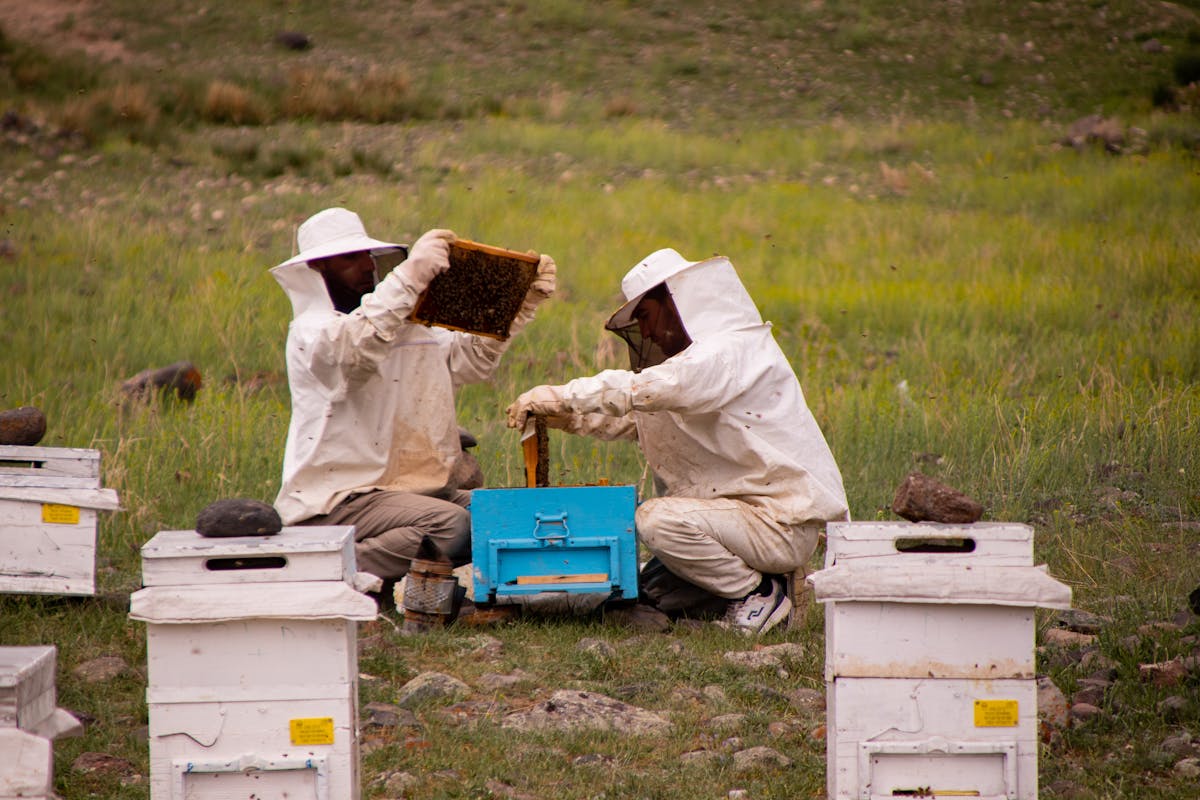
Be honest: how do you keep track of what's happening in your hives?
If you're like most beekeepers, the answer falls into one of three categories: memory ("I'll remember"), paper notes (a notebook in your truck, maybe), or no system at all (inspections happen, records don't).
None of these are bad starting points. Every beekeeper begins somewhere. But here's the thing — your record-keeping method directly impacts how many colonies you lose, how quickly you spot problems, and whether your operation gets better over time or just stays the same.
Let's walk through a real season and see how three different approaches play out.
The Spring Inspection: Week 1
You open Hive #4. Brood pattern looks decent. You spot the queen — she's laying. Population seems a little low for the time of year, but nothing alarming. You notice a few varroa on the bottom board. You close up and move to the next hive.
How each method handles this moment:
Three Weeks Later: Something's Wrong
You open Hive #4 again. Population is definitely lower now. Brood pattern has gaps. You don't see the queen. Is she gone? Was she failing last time and you missed it? When did this start?
Memory
- You think the queen was there last time, but you're not certain
- Can't remember the varroa detail
- No baseline to compare population
- You're guessing at what changed
Paper Notes
- You find the entry: "H4 — queen, brood ok, varroa, pop low"
- Helpful, but incomplete — how low was "low"?
- No way to see trends over multiple inspections
- Notes from 6 months ago are in a different notebook
BeeKeeperVoice
- Pull up Hive #4 — full inspection history right there
- See exact population and brood scores over time
- Declining trend is immediately visible
- Queen was present 3 weeks ago — confirmed in the record
The beekeeper relying on memory is now making treatment decisions based on feelings. The paper beekeeper has a clue but no context. The BeeKeeperVoice beekeeper sees the pattern clearly: population has been declining for three inspections, varroa was flagged weeks ago, and action is overdue.
End of Season: Where the Gap Becomes a Canyon
Now multiply that difference across an entire season. Across every hive. Across every queen decision, every treatment window, every swarm you didn't predict.
End-of-season reality check:
The Power of Long-Term Trends
Here's where digital tracking with AI separates itself entirely from memory and paper. Individual inspections are snapshots. Trends are the movie.
When you have months or years of structured data, patterns emerge that no human could spot from memory:
- Queen performance over generations — Is your breeding program actually improving? Which genetic lines produce the strongest colonies year after year?
- Seasonal patterns — Do your hives consistently dip in August? Is your mite load always highest in a particular yard?
- Treatment effectiveness — Did the oxalic acid dribble actually reduce mites, or did the count bounce right back? Data tells you what worked.
- Predictive warnings — A colony that's been slowly declining over three inspections is likely headed for trouble, even if today's snapshot looks "okay."
What AI adds to this
BeeKeeperVoice's Hive Command doesn't just store your data — it reads it for you. Ask "Which hives need attention this week?" and the AI analyzes your entire apiary's inspection history, varroa trends, queen performance scores, and treatment schedules to give you a prioritized action list. It's like having a second pair of eyes that never forgets, never gets tired, and has reviewed every inspection you've ever done.
The Comparison Nobody Wants to Make
Most beekeepers know they should keep better records. The reason they don't isn't laziness — it's friction. Pulling off gloves, finding a pen, trying to write with propolis-sticky fingers while bees land on your notebook. It's just not practical.
That's the core insight: the best record-keeping system is the one you'll actually use.
Memory Alone
- Zero friction to "record"
- 50%+ forgotten within a week
- No trends, no comparisons
- Decisions based on gut feel
- Same mistakes repeated
Paper Notes
- High friction — gloves off, pen out
- Abbreviated, inconsistent
- Hard to search or compare
- Lost, damaged, or scattered
- No analysis possible
BeeKeeperVoice
- Zero friction — gloves stay on
- 100% captured, every time
- Searchable, structured, shareable
- AI finds trends you'd miss
- Each season builds on the last
The Real Cost of Not Tracking
Lost colonies aren't just emotionally painful — they're expensive. Replacement packages, lost honey production, wasted treatments, failed queens you didn't catch in time. For a sideliner with 20 hives, preventable losses can cost hundreds or thousands of dollars per season.
Meanwhile, the data that could have prevented those losses was right there in the hive, waiting to be recorded. The queen was failing. The mites were climbing. The population was dropping. The signs were all there — they just never made it into a record anyone could act on.
Good record-keeping doesn't take more time. It saves time. And when the records are voice-powered, hands-free, and analyzed by AI, they save colonies too.
Stop losing data. Start seeing patterns.
Try BeeKeeperVoice free for a full month and find out what your hives have been trying to tell you.
Download on App Store