NFC Tags for Beekeepers: A Practical Guide
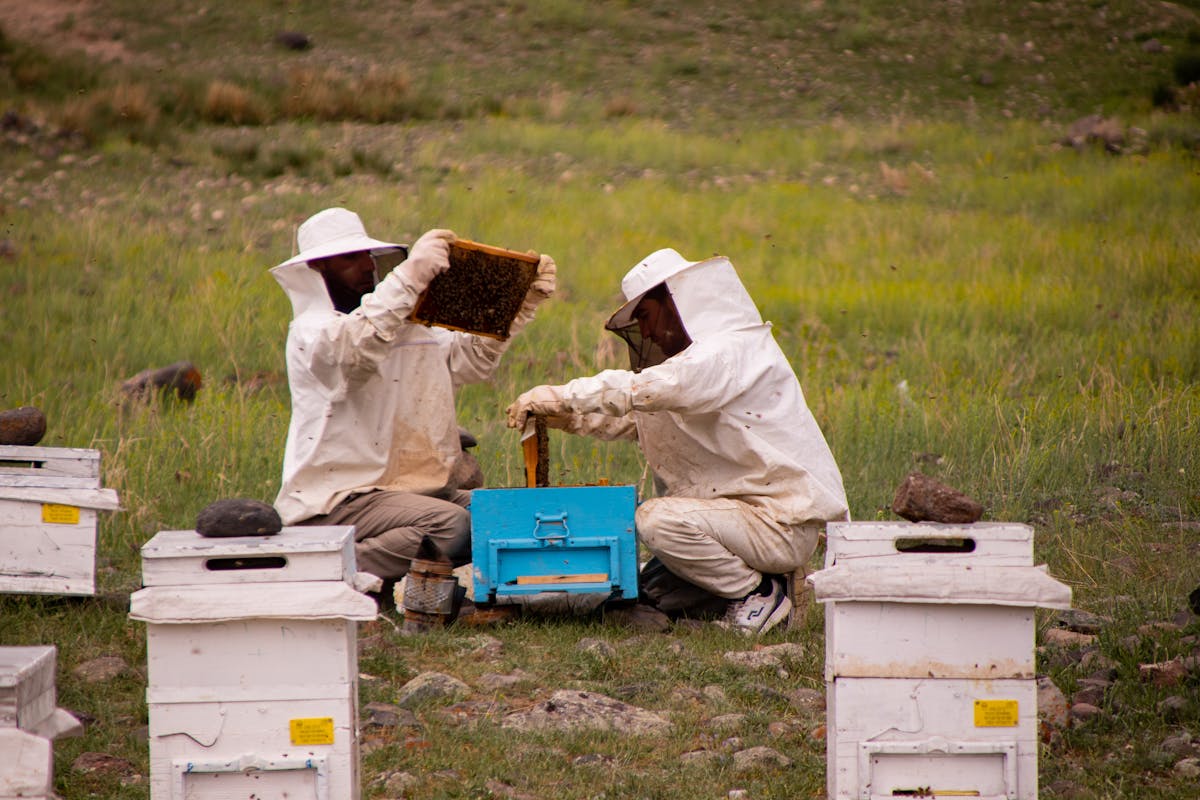
Walk into any apiary with more than five hives and you'll see the same scene: faded paint markings on hive boxes, half-readable Sharpie scrawls, numbered metal tags that rusted off two seasons ago, and at least one hive whose identifier is "the one near the oak tree." Every keeper has a system. Every system fails.
NFC tags fix that — and they're so cheap and so simple that the only reason they're not standard equipment in every apiary is that nobody has explained them properly to beekeepers. So let's do that.
What NFC Actually Is
NFC stands for Near Field Communication. It's the same technology that lets you tap your phone to pay at a checkout terminal, tap a transit card on a turnstile, or tap a hotel room key against a door lock. It's a tiny chip with an even tinier antenna, embedded in a sticker, fob, or disk. The chip has no battery — it draws the small amount of power it needs from the magnetic field of the phone that's reading it.
When you tap your phone against an NFC tag, your phone reads a unique ID off the chip — and optionally a small piece of data the tag is carrying (a URL, a hive number, a queen ID). That's it. There's nothing to charge, nothing to pair, nothing to connect to Wi-Fi. The tag just sits there, waiting, for years.
Why NFC, and not QR codes or Bluetooth?
- QR codes need a clean line of sight, good light, and a steady hand. In a sunny apiary, with bees on the box, with a propolis smear across the code? They fail constantly. They also require you to open a camera app first.
- Bluetooth tags need batteries. Batteries die. They also broadcast continuously and pair awkwardly. Not great for 30 hives in a yard.
- NFC tags need no battery, no light, no line of sight. You just tap. Through gloves. Through mud. Through propolis. They last 10+ years. They cost cents.
Yes, NFC Works Through Gloves
This is the question every beekeeper asks first, so let's answer it directly: yes, NFC works through nitrile gloves, leather gloves, ventilated gloves, and most thick beekeeping gloves.
NFC reads at a range of about 1–4 cm (less than 2 inches). The phone doesn't care what's between it and the tag, as long as it's not a thick metal sheet. Cotton, leather, nitrile, polyester, propolis residue, sweat, water — all transparent to NFC. You don't take a glove off. You don't peel the back of your suit. You just bring the back of your phone close to where the tag is, and it reads.
The only material that interferes meaningfully is metal in direct contact with the tag. If you stick an NFC tag directly on a metal surface, the metal absorbs the field and the tag won't read. The fix is simple: use "on-metal" NFC tags (which have a ferrite shielding layer built in), or stick the tag onto plastic, wood, or a label first, with a small air gap from any metal.
Quick reality check
If your phone can pay at a checkout terminal while still in its case, it can read an NFC tag on a hive. Same chip, same range, same reliability. The barrier in beekeeping isn't the technology — it's that no one has ever shown beekeepers what to do with it.
What to Tag in an Apiary
1. Hives (the obvious one)
Every hive gets a tag. Stick it on the front of the hive box near the entrance, on the top cover, or on the side at chest height. When you walk up, you tap once with your phone, and the app instantly knows: this is Hive 3, last inspected 11 days ago, queen is yellow-marked Daisy, last treatment was oxalic acid on March 22, brood pattern was tightening on the previous visit.
No squinting at faded numbers. No "wait, is this Hive 6 or Hive 9?" No flipping notebooks. Tap, identified, history loaded. In BeeKeeperVoice you tap the tag and the app starts the inspection automatically — every voice note, every photo, every observation from that point forward is saved to that specific hive.
2. Queens
You can't tag a queen directly (don't try) — but you can tag her cage, her introduction frame, or the queen-record card she came with. When you receive a new queen, tap the tag once and link it to the queen's record: lineage, breeder, marking color, mark year, traits, source. From then on, anywhere that queen ends up — Hive 5, then a split into Hive 17, then a supersedure — her identity travels with her record, not with whichever hive she happens to be in.
3. Queen cells
Doing queen rearing? Tag your cell-builder frames, your mating nuc lids, or the small cell-protector cages. When a queen cell is capped and assigned to a mating nuc, tap the tag and link it to the cell's record: graft date, lineage, expected emergence. When that mating nuc is later opened, you tap once and instantly know whether you should be looking for a virgin queen, a mated queen, or eggs.
This is genuinely a game-changer for queen rearing operations, where the bottleneck has always been keeping track of which cell came from which mother and which mating nuc holds which lineage.
4. Nucs and mating nucs
Nucs are the worst-organized boxes in any apiary. They get moved, they get combined, they get harvested for queens, and they're rarely numbered. Tag every nuc lid with an NFC tag and the chaos disappears. Tap to identify, tap to inspect, tap to update the record when you transfer the nuc into a full hive.
5. Apiaries themselves
If you keep bees in multiple yards, tag the gate, the shed, or a fixed post at each yard. When you arrive, tap once — the app sets your default apiary, loads the yard's hive list, weather context, and any flagged action items. You skip the manual "switch to South Yard" step that's easy to forget when you're already focused on the bees.
6. Equipment that moves
Honey supers in storage. Frames being rotated out for replacement. Treatment trays. Anything that physically migrates from hive to hive can carry a tag, and the tag carries the history with it. When you put a tagged honey super onto Hive 4, tap to log it. Two months later when you pull it for extraction, tap again — you know exactly which hive it came from.
Where to Source NFC Tags
You don't need anything exotic. The standard, beekeeper-friendly options are:
NTAG213, NTAG215, or NTAG216 stickers
These are the most common consumer NFC chips. All three work with every modern iPhone (iPhone 7 and newer) and Android phone. Differences:
- NTAG213 — 144 bytes of writable memory. Plenty for storing a hive ID. Cheapest option.
- NTAG215 — 504 bytes. Useful if you want to write a longer URL or richer data. Slight price bump.
- NTAG216 — 888 bytes. Overkill for most beekeeping uses. Only worth it if you have a specific reason.
For most beekeepers, NTAG215 is the sweet spot. Cheap, fast, more memory than you'll need, and universally compatible.
Where to buy
- Amazon — search "NTAG215 NFC stickers" or "NTAG215 stickers waterproof." Packs of 50 typically run $10–$20. Look for ones explicitly marketed as waterproof or PVC-coated.
- GoToTags / Seritag / NFC Tagify — specialty NFC suppliers, slightly more expensive but more durable, with on-metal options and pre-printed designs.
- AliExpress — cheapest per-tag price. Quality varies; buy a small pack first to test.
What to look for
- Waterproof / PVC-encased — must-have. Apiaries get rained on.
- UV-resistant — bonus. Tags exposed to direct summer sun for years will yellow but generally still read fine.
- On-metal versions — needed only if you plan to stick directly onto a metal surface. Otherwise standard tags are fine.
- Round disks (25mm) or square stickers (30mm × 30mm) — easier to tap than tiny ones. A larger antenna = a more forgiving read range.
Avoid: tiny sub-20mm tags (read range too short), keychain fobs (the form factor is wrong for hive boxes), and anything described as "low-frequency" (those are not NFC — they're a different RFID standard that won't work with smartphones).
How to Deploy Tags in an Apiary
- Buy a pack of 50 NTAG215 waterproof stickers. About $15.
- Stick one on every hive at chest height, somewhere protected from direct rain runoff (under the lip of the top cover, on the front face below the entrance reducer, or on a side panel). Press firmly so the adhesive grabs.
- Open BeeKeeperVoice and link each tag to its hive when you write it. Tap the tag, confirm the hive identity, save. Twenty hives takes about five minutes.
- Spare tags go on nucs, queen cages, and apiary entrances as you go. You'll find uses you didn't anticipate.
- Replace a tag every few seasons if it gets damaged. Most last 5–10 years outdoors. The chip itself will outlast the adhesive.
Real Scenarios: NFC at the Apiary
Scenario 1: Walking into the yard
Scenario 2: Queen rearing
Scenario 3: A second beekeeper helps out
NFC vs. Other Identification Methods
| Method | Works through gloves | Works in rain / dirt | Auto-loads history | Cost per hive | Lasts |
|---|---|---|---|---|---|
| Painted numbers | Yes | Fades | No | ~$0 | 2–3 seasons |
| Sharpie on box | Yes | Smears, fades fast | No | ~$0 | Months |
| QR code stickers | Need camera + light | Fail with smudge | If app supports it | Cents | UV degrades fast |
| Bluetooth tags | Yes | Yes | If paired | $5–$30 each | Battery dependent |
| NFC tags | Yes | Yes | Yes — instant | ~$0.30 each | 5–10+ years |
Practical Tips From Real Use
- Don't put the tag where you'll set the smoker on it. Heat won't destroy a modern NFC chip below about 150°C, but melted PVC adhesive is a problem.
- Mount tags consistently. Same spot on every hive. Muscle memory matters when you're tapping 30 boxes in a row.
- Label the back of each tag with a number too. Belt-and-suspenders. If a tag ever fails, you still know which hive it was assigned to.
- Test with one hive first. Tag, link, inspect. Make sure the workflow feels right before you tag the whole yard.
- Keep a small ziplock of spare tags in your toolkit. Splits, swarms, new boxes — you'll always need one more than you brought.
The Bottom Line
NFC tags are the most underrated piece of beekeeping equipment of the last decade. They cost cents. They last years. They work through gloves, rain, and propolis. And paired with an app that uses them properly, they turn your apiary from a collection of guesswork-numbered boxes into a structured system where every hive has a permanent, queryable identity.
The only reason almost no one is talking about this is that the beekeeping industry hasn't caught up with how cheap and reliable NFC has become. You can tag a 20-hive apiary for under $10 in tags and ten minutes of setup. The payoff is every inspection, every season, forever.
Buy a pack of fifty NTAG215 stickers. Stick one on every hive. Tap to start each inspection. Watch how much friction disappears.
Tap. Identify. Inspect.
BeeKeeperVoice reads NFC tags out of the box — every tap loads the hive's full history, sets the inspection context, and routes your voice notes and photos to the right record automatically. Free for a full month.
Download on App Store