Voice-Controlled Camera + AI Image Analysis: A New Set of Eyes at the Hive
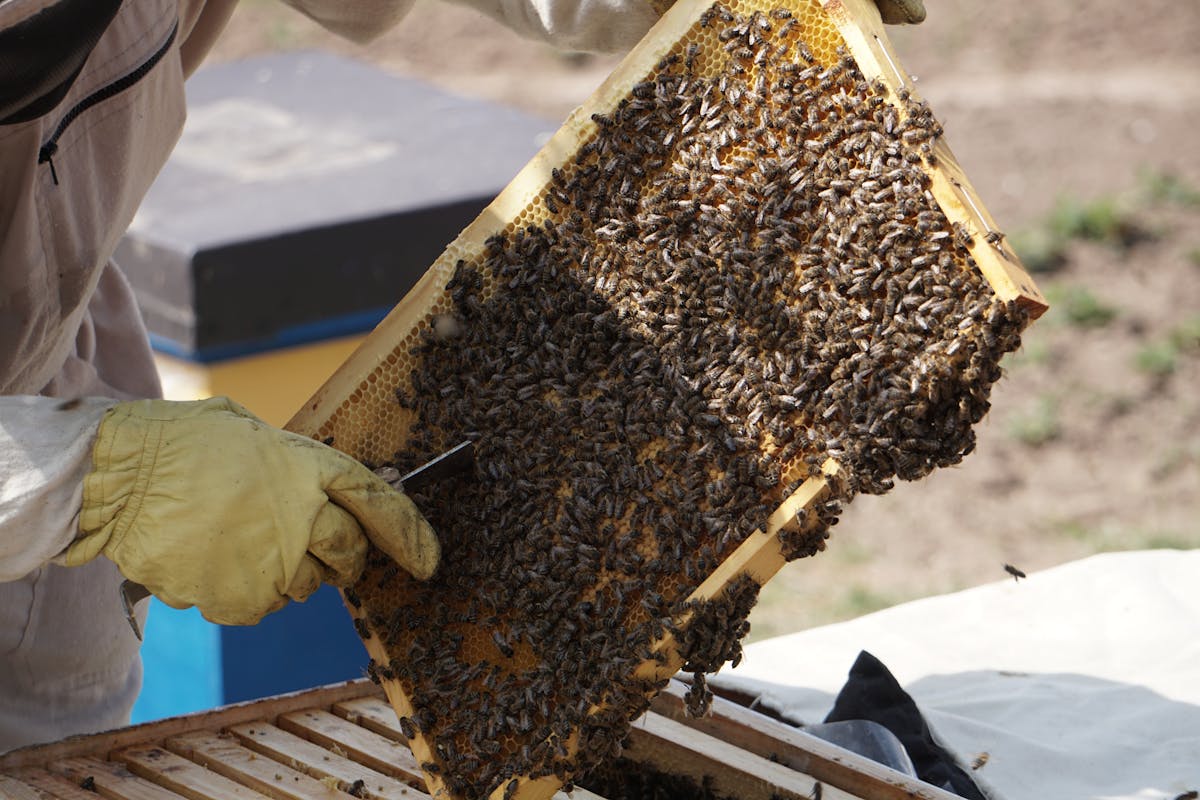
You're standing in front of an open hive. Both hands are busy — one gripping a frame crawling with 2,000 bees, the other holding a hive tool slick with propolis. You see something worth a closer look: a spotty brood pattern, a suspicious cell, maybe even the queen herself.
What do you do? Set the frame down, peel off a glove, dig out your phone, unlock it, open the camera, line up the shot, fumble the tap, and hope you got it before a bee lands on the lens?
That sequence is the reason most beekeepers take almost no photos during inspections — even when the data would be gold. The friction kills the habit before it starts.
A voice-controlled camera with AI image analysis changes the math entirely. Here's what that actually looks like at the hive, and how BeeKeeperVoice ties it into the rest of your inspection workflow.
"Take Photo." That's It.
The whole interaction is two words. You're holding a frame, you see something, you say "take photo" — and the phone in your pocket (or on the hive lid, or mounted on your chest) fires the camera. No unlocking. No tapping. No glove removal. No setting the frame down.
In BeeKeeperVoice, the camera is wired into the same hands-free voice system that runs the rest of the app. Because an inspection is already underway and the hive is already selected — via NFC tag or voice command — every photo you capture is automatically linked to that hive, that inspection, and that moment in the timeline. No sorting through a camera roll of 400 unlabeled frame shots three weeks later, trying to remember which hive was which.
Voice tip
Pair "take photo" with spoken context: "Take photo — spotty brood, upper left." The image and the note land on the same inspection record, so the photo arrives with its caption already written.
Where AI Image Analysis Actually Earns Its Keep
Voice capture solves the taking of the photo. AI image analysis solves the harder part: turning a photo into information you can actually use.
A beekeeper's eye is trained, but it's also tired, rushed, and sometimes wrong. A good vision model doesn't replace that eye — it backs it up. Here's where it matters most:
1. Brood Pattern Assessment
A solid brood pattern is one of the clearest signals of queen quality. But "solid" is subjective, and a frame that looked great in May can drift in June without you noticing. Point the camera at a brood frame, say "take photo," and the AI can estimate capped brood coverage, flag missed cells, and compare the pattern to previous shots of the same hive. Over a season, you build a visual timeline of brood quality per queen — not a memory, an actual record.
2. Varroa Mite Detection
A sugar roll or alcohol wash gives you a number. A photo of a drone brood cut or a sticky board gives you a different kind of evidence. AI analysis can count phoretic mites on adult bees in a close-up or estimate mite drop from a bottom-board image faster and more consistently than the human eye. Combine that with BeeKeeperVoice's structured mite count logging and you get a real trendline, not just a gut feeling.
3. Queen Spotting and Marking Verification
Queens hide. And when you think you've spotted her, you're not always 100% sure. Voice-snap a wide frame shot, and the AI can scan for a queen in the image — catching the ones you missed because your eyes were on a different part of the comb. For marked queens, it can verify the mark color against your queen records (Q-2025-07, blue) and flag a mismatch — useful if you're wondering whether a supersedure happened quietly.
4. Disease and Pest Flags
Chalkbrood mummies, sunken cappings, discolored larvae, small hive beetles scurrying across the bottom board. These are exactly the "wait, what was that?" moments where a photo is worth more than a voice note. AI image analysis can surface visual patterns consistent with common brood diseases and pests and tag the photo for follow-up — not as a diagnosis, but as a prompt to look closer before you close the hive.
5. Population and Frame Coverage Estimates
"How strong is this hive?" is one of the hardest questions to answer consistently. A voice-captured frame photo lets the AI estimate bee coverage percentage across the frame, and over an inspection you can build a frames-of-bees estimate without guessing. Tie that to weight data from a scale and you've got two independent measures of colony strength.
Why the Voice + Camera + Structured Data Combo Matters
Any phone has a camera. Any phone can run a general-purpose image model. What's missing from that setup is the glue — and the glue is what makes this useful in the field.
In BeeKeeperVoice, a photo is never just a photo. It's attached to:
- The hive — pulled in automatically from the NFC tag or the voice-selected hive at the start of inspection.
- The inspection — linked to the checklist step you're on, so you know whether the shot was taken during the brood check or the mite wash.
- The queen record — inherited from the hive, so a photo of a brood frame becomes evidence tied to a specific queen's performance score.
- The spoken note — whatever you said when you took the shot travels with the image.
- The date, weather, and apiary — automatic, so you can filter later by "all brood shots at East Yard in April."
That's the difference between a camera roll and a queryable visual record. Ask Hive Command later: "Show me every brood photo for Hive 7 this spring." Done. Ask: "Which hives have chalkbrood flags in the last month?" Done. That only works because the photo was captured into structured data instead of a folder.
Scenario: A suspicious cell on frame 4
The Compounding Effect Over Seasons
One photo is a snapshot. A hundred photos of the same hive over two seasons is a time-lapse of colony health. The AI can compare the brood pattern of Hive 7 in April 2026 to April 2025 and tell you whether this queen is tracking ahead of, equal to, or behind her mother. That's not a feature you can get by taking photos into your camera roll and hoping to remember.
Every voice-captured, AI-analyzed photo becomes a data point in the long-term performance picture of a hive, a queen, and a lineage. That's where serious beekeeping wins — the compounding of years of clean data, captured without friction, in the moments you'd otherwise skip because your hands were full.
What It Doesn't Do (And Shouldn't)
AI image analysis is a second set of eyes. It is not a veterinarian, and it is not a replacement for judgment. If the AI flags a frame for possible EFB, that's a prompt to look harder, test if needed, and call in expertise — not an order to panic-treat. The value isn't in the AI being right every time. The value is in it noticing things you'd have missed, on a day when you were tired, so you get a second chance to look.
The Bottom Line
The old trade-off was: take photos and slow down, or move fast and skip them. A voice-controlled camera with AI image analysis breaks that trade-off. You get the photos and you keep your gloves on and the data lands in the right place, tagged to the right hive, ready to be queried months later.
That's what BeeKeeperVoice is built for — not layering another tool onto inspections, but removing every step between "I noticed something" and "it's in the record." Your eyes stay on the bees. Your hands stay on the frame. The phone, the camera, and the AI do the paperwork.
Hands-free inspections, AI-powered eyes.
Voice-controlled camera, structured inspection data, Hive Command AI, and offline capability — all built for the hive, not the desk. Free for a full month.
Download on App Store