How to Do an Alcohol Mite Wash (And Actually Use the Results)
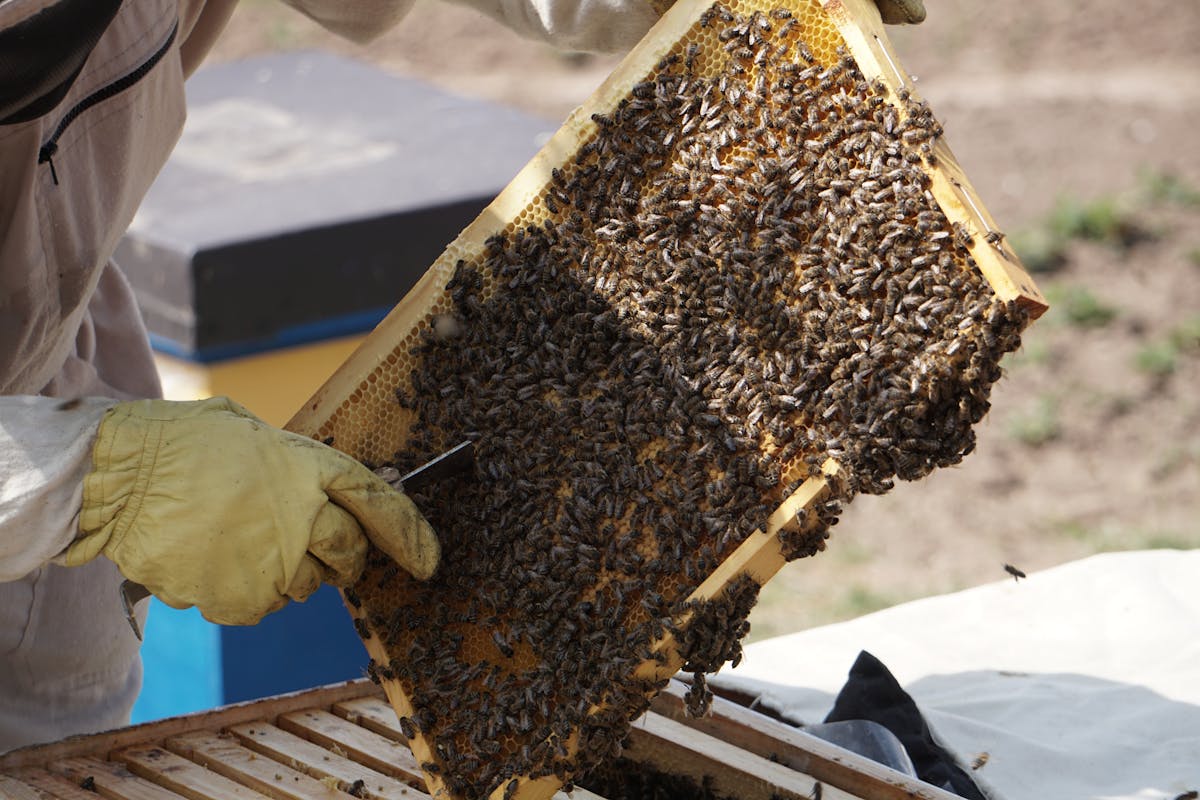
Let's skip the part where I explain what Varroa destructor is. You know. They're in your hives. The question isn't whether you have mites — it's how many, and whether you're going to do something about it before they crash your colonies.
The alcohol wash is the most accurate field method for measuring your mite load. Not the most pleasant — you're sacrificing about 300 bees — but it gives you a real number, not a guess. And a real number is the difference between treating at the right time and treating too late.
Here's exactly how to do it, when to do it, what the numbers mean, and the mistakes that trip up even experienced beekeepers.
Why This Matters More Than You Think
A colony can look perfectly healthy with a mite load that's about to destroy it. Bees don't show obvious symptoms until the mite population has already reached the point of no return. By the time you see deformed wing virus, it's not an early warning — it's a death sentence that was signed weeks ago.
Beekeepers who test regularly lose fewer colonies. Period. Not because testing is magic — because it gives you a timeline. You know where you stand, you know when it's getting worse, and you can act before "getting worse" becomes "too late."
The hard truth
Most beekeepers who lose colonies to mites didn't have a mite problem they ignored. They had a mite problem they never measured. You can't manage what you don't monitor.
What You Need
- Mite wash cup — double-cup system with a mesh strainer (Easy Check or DIY with two cups and #8 hardware cloth)
- 70% isopropyl alcohol (rubbing alcohol) — windshield washer fluid also works
- Measuring cup or scoop — 1/2 cup measure (gives you approximately 300 bees)
- White bowl or container — to count mites against
- Water — to rinse and separate mites from alcohol
Total cost for a DIY setup: under $10. Commercial Easy Check cups are about $25 and worth every penny if you test often.
The Process: Step by Step
1 Find the Right Frame
Pull a frame of open brood from the center of the brood nest. This is critical. Mites concentrate on nurse bees because they need to access brood cells to reproduce. A frame from the edge of the box or a honey frame will give you an artificially low count.
Do NOT sample the frame with the queen on it. Look before you scoop. Killing your queen to count mites is not the trade you want to make.
2 Scoop the Bees
Use your 1/2 cup measure to scoop bees directly off the frame into the collection cup. Scoop upward in a smooth motion. You want approximately 300 bees — a level half-cup gets you close enough.
Don't agonize over the exact count. 280 or 320 bees will give you a usable result. Precision matters less than consistency — do it the same way every time.
3 Add Alcohol
Pour enough 70% isopropyl alcohol to cover the bees completely — about 2-3 inches above them. Put the lid on immediately. The alcohol kills the bees instantly and causes the mites to release their grip.
4 Swirl and Wait
Swirl the cup gently for at least 60 seconds. Not a quick shake — a sustained, gentle swirl. Think washing machine, not cocktail shaker. This gives the alcohol time to dislodge all the mites.
Some beekeepers swirl for 2 minutes. More swirling doesn't hurt. Less swirling gives you a lower (inaccurate) count.
5 Strain and Count
Pour the alcohol through the mesh strainer into your white bowl. The bees stay in the strainer; the mites fall through into the bowl. Add a little water to make the mites easier to see — they're small, dark brown, and oval-shaped.
Count every mite. If you're having trouble seeing them, add more water and swirl gently. Mites will settle to the bottom.
Pro tip: Do a second rinse. Pour more alcohol or water back through the bees in the strainer and strain again. You'll often pick up 2-5 more mites on the second pass.
6 Calculate Your Mite Load
Divide the number of mites by 300 (your approximate bee count), then multiply by 100. This gives you mites per 100 bees.
Example: 9 mites ÷ 300 bees × 100 = 3.0 mites per 100 bees
How BeeKeeperVoice helps
Say "Mite wash: 9 mites, 300 bees, 3 per hundred" while you're still at the hive. The count is logged, timestamped, and attached to that specific colony's record. No fumbling with a notebook while your hands are covered in alcohol and dead bees. When you ask Hive Command "Which hives need treatment?" later, it already knows.
What the Numbers Mean
| Mites per 100 Bees | Status | Action |
|---|---|---|
| 0 - 1 | Low | Monitor. Retest in 4 weeks. |
| 2 - 3 | Moderate | Plan treatment. Treat within 2 weeks if rising. |
| 3+ | High | Treat immediately. Retest after treatment to confirm efficacy. |
| 5+ | Critical | Colony may already be compromised. Treat aggressively and assess queen viability. |
Important nuance: These thresholds shift with the season. A count of 2 in April is very different from a count of 2 in August. Mite populations grow exponentially through summer. A "moderate" count in July becomes a "colony killer" count by September if you don't act.
How BeeKeeperVoice helps
The AI tracks your mite counts over time and understands the seasonal context. It doesn't just tell you today's number — it shows you the trend. A count of 2 that was 0.5 two months ago is a very different situation than a count of 2 that's been stable all season. Hive Command connects those dots automatically and alerts you when a colony's mite trajectory is heading toward trouble.
When to Test (And How Often)
Here's the testing schedule that serious beekeepers follow:
- Early spring (March-April): Baseline test after winter. Tells you where you're starting.
- Late spring (May-June): Pre-honey flow check. If you need to treat, this is your last window before supers go on.
- Mid-summer (July): The critical test. Mite populations are building fast. This is where most beekeepers who lose colonies failed to test.
- Late summer (August-September): Post-treatment verification. Did your treatment work? Are you going into fall with a manageable load?
- Fall (October): Final check before winter. The bees being born now need to survive until March.
Minimum: Test every colony at least 3 times per year (spring, mid-summer, fall). More is better. If a colony seems off — test it.
How BeeKeeperVoice helps
Set voice reminders: "Remind me to do mite washes in 4 weeks." The work calendar keeps your testing schedule visible so no colony slips through the cracks. After a year of tracking, you'll have a complete mite history for every hive — the kind of data that transforms guessing into management.
Common Mistakes (And How to Avoid Them)
Sampling from the wrong place
Bees from honey supers, the outside of the cluster, or frames without brood will give you a count that's too low. Always sample from open brood frames in the center of the brood nest. That's where the mites are.
Not swirling long enough
A quick 10-second shake doesn't dislodge all the mites. You'll undercount by 20-30%. Swirl for a full 60 seconds minimum. Set a timer on your phone if you have to.
Testing only once per season
A single test tells you almost nothing because you have no context. Is 2 mites per 100 bees going up or going down? You can't know without a previous data point. Testing is only useful when you do it repeatedly.
Testing but not recording
You did the wash. You counted 7 mites. You treated. Three months later — what was the count? Which hive was it? Did the treatment bring it down? If you didn't record it, the test was half wasted. The number only has value when it's part of a timeline.
Skipping the second rinse
That second pass through the strainer routinely picks up 2-5 additional mites. On a count that might be the difference between "monitor" and "treat," those extra mites matter.
Avoiding the test because you don't want to kill 300 bees
Understandable. But a healthy colony has 40,000-60,000 bees. You're sacrificing 0.5% to potentially save the other 99.5%. A queen lays 300 eggs before lunch. The colony won't notice. Not testing — that's what kills colonies.
Alcohol Wash vs. Other Methods
| Method | Accuracy | Kills Bees? | Ease | Best For |
|---|---|---|---|---|
| Alcohol Wash | Highest (~95%) | Yes (~300) | Moderate | Accurate counts when decisions matter |
| Sugar Roll | Moderate (~70%) | No | Moderate | Beekeepers who won't sacrifice bees |
| Sticky Board (24hr) | Low (~50%) | No | Easy | General presence/absence, not accurate counts |
| CO2 Method | High (~90%) | No | Hard (needs equipment) | Lab settings, research |
My take: The alcohol wash is the standard for a reason. Sugar rolls are fine if you absolutely can't bring yourself to sacrifice the bees, but know that you're undercounting by roughly 25-30%. That means your "2 per hundred" sugar roll might actually be a "3 per hundred" alcohol wash — and that's the difference between "monitor" and "treat now."
Sticky boards are useful for confirming that mites exist, but they're terrible for measuring load. Natural mite fall varies wildly based on colony size, activity level, and weather. Don't make treatment decisions based on sticky board counts alone.
Pro Tips From the Apiary
- Pre-pour your alcohol into a squeeze bottle. Faster, less mess, less waste.
- Bring a dedicated "mite kit" in a bucket — cups, alcohol, scoop, white bowl, water bottle. Grab and go.
- Test your worst-looking colony first. If your best-looking hive is at 3 per hundred, you have a yard-wide problem.
- Test at least 3 hives per yard. Mite loads vary wildly between colonies. One hive at 1 per hundred and another at 5 is common.
- Don't test right after a treatment. Wait at least 2 weeks for the treatment to finish working before rechecking.
- Record the date, hive, count, and any treatment applied. Future you will thank present you.
- If you're doing a lot of washes, fill multiple cups with bees as you go through hives, then do all the washes at once at your truck. Faster than washing one at a time.
How BeeKeeperVoice helps
As you move through your yard doing washes, just speak: "Hive 3, mite wash, 4 mites." "Hive 7, mite wash, 11 mites." "Hive 12, mite wash, 2 mites." Every count is logged to the right hive instantly. At the end of the day, ask Hive Command: "Which hives had mite counts above 3 today?" and get your treatment list in seconds. Over time, you build a complete mite history — by hive, by yard, by season — that tells you exactly how your management is working.
Sampling Bias: Where Most Washes Actually Go Wrong
Here's the thing most articles won't tell you: your mite number is only as good as your sampling method. Two beekeepers can wash bees from the same hive and get different counts depending on where they sampled.
Brood frame vs. nurse bees vs. foragers
Phoretic mites ride on nurse bees because they need access to brood cells to reproduce. Sampling from a brood frame gives you the highest — and most relevant — count. Sampling foragers from the entrance or bees from a honey super will give you an artificially low number. You're measuring the wrong population.
Drone contamination
This is an underappreciated error source. Varroa strongly prefer drone brood — mite reproduction rates in drone cells are 8-12x higher than worker cells. If your sample includes even a few dozen nurse bees from drone comb, your count can spike dramatically. That's not necessarily wrong, but it's not comparable to a sample from worker brood. Be consistent about where you scoop.
Time of day and season
Phoretic mite load shifts depending on how much brood is available. During a brood break (late fall, after a swarm, during requeening), more mites are phoretic — riding on adult bees — which means your wash count goes up even if the total mite population hasn't changed. In peak brood season, many mites are hidden inside capped cells and won't show up in a wash at all.
This means a count of 3% during a broodless period is very different from 3% with 8 frames of brood. Context matters.
Recovery Rate: Your Number Is NOT the Real Number
Even a perfectly executed alcohol wash doesn't recover 100% of the phoretic mites in your sample. Research shows recovery rates vary significantly based on technique:
- Vigorous sustained agitation (60+ seconds): ~88% recovery
- Gentle swirling (30 seconds): ~70% recovery
- Quick shake and pour: ~59% recovery
What this means in practice: a "3% wash" with weak technique might actually be a 4-5% real infestation. You could be sitting at a count you think is moderate when you're actually already in the danger zone.
Under-shaking creates a false sense of safety. This is why I harp on the 60-second minimum. It's not a suggestion — it's the difference between an accurate measurement and a feel-good number.
The math that matters
If your technique recovers 70% of mites and you count 6 in your sample, the real phoretic count on those 300 bees is closer to 8-9. That's the difference between "treat soon" and "treat yesterday." Technique errors always undercount. They never overcount.
The Four Failure Points (Understand the Mechanics)
Most articles say "shake and count." That's shallow. An alcohol wash actually has four distinct steps, and each one is a potential failure point:
- Release — The alcohol (or detergent/CO2) causes mites to release their grip on the bee's body. Insufficient contact time = mites still attached.
- Dislodgement — Physical agitation knocks released mites free from between body segments and leg joints. Insufficient swirling = mites trapped in bee bodies.
- Separation — Straining separates mites from bees. Mesh too large = mites don't fall through. Mesh too small = alcohol doesn't flow. #8 hardware cloth is the standard for a reason.
- Counting — Visual identification in the bowl. Dark bowl = missed mites. Insufficient water = mites clumped together. Rushing = undercounting by 10-20%.
Understanding these as separate steps changes how you approach the wash. You stop thinking "shake and count" and start thinking "maximize recovery at each stage."
Thresholds Are Not Universal
Every mite article says "treat at 2-3%." That's a useful starting point, but it's too simplistic for anyone making real management decisions.
Thresholds depend on:
- Time of year. A count of 2% in April — when brood is expanding and mite population is at its annual low — is very different from 2% in August, when mite populations are doubling every 3-4 weeks. Late season, 2% can already be dangerous because the trajectory is steep.
- Colony growth rate. A booming colony with 10 frames of brood can tolerate a higher absolute mite count because the bees-to-mites ratio is diluted. A weak colony with 3 frames of brood and the same mite count is in far worse shape.
- Local reinfestation pressure. If you're in an area with feral colonies, other beekeepers who don't treat, or high-density apiaries, your mites will bounce back faster after treatment. Your "safe" threshold needs to be lower because the clock restarts immediately.
- Virus load. Varroa doesn't kill colonies directly — it vectors viruses like Deformed Wing Virus (DWV), Acute Bee Paralysis Virus, and others. Two colonies with identical mite counts can have vastly different outcomes depending on virus prevalence. A colony with high DWV will crash at lower mite thresholds than a colony with low virus pressure.
The honest answer: There is no magic number. There's a range, a season, a context, and a trend. The 2-3% guideline keeps most beekeepers out of trouble most of the time. But if you want to be precise, you need to think about all four factors above.
Trend Beats Snapshot: The Most Important Upgrade
If you take one thing from this entire article, make it this:
Don't treat off a number — treat off a trajectory.
- One wash = a snapshot. Useful, but limited.
- Two washes (4 weeks apart) = a direction. Now you know if it's going up or down.
- Three washes = decision confidence. You can see the curve and project where it's heading.
A colony at 2% that was 0.5% six weeks ago is on a steep upward trajectory and will likely blow past 3% within two weeks. Treat now.
A colony at 2% that's been at 2% for three consecutive washes is stable. Monitor closely, but you may have time.
A colony at 2% that was 4% before treatment and is now declining — that's your treatment working. Continue monitoring to confirm it drops further.
Same number. Three completely different situations. The trend tells you what to do; the single number doesn't.
How BeeKeeperVoice helps
This is where voice-logged mite data becomes genuinely powerful. Every wash you record builds the trend line. Hive Command doesn't just show you today's count — it shows you the trajectory across weeks and months, for every colony individually. Ask "Show me hives with rising mite counts" and the AI identifies colonies on dangerous upward curves before they hit the threshold. You stop reacting and start anticipating.
Connecting Mite Washes to Breeding Decisions
If you're raising queens — or even just deciding which colonies to propagate — mite wash data is breeding data. But you have to read it correctly.
Low mite counts alone don't mean a colony is mite-resistant. A colony could have low counts because:
- It's in a low-reinfestation area
- You treated it recently
- It's a small colony with less brood (fewer mites because fewer reproduction sites)
- It actually has genetic resistance (VSH, SMR, grooming behavior)
What you're looking for is a colony with consistently low counts AND a stable or declining trend over multiple seasons, without treatment — or with minimal treatment compared to neighboring colonies. That's a breeder candidate.
A colony with low counts but a fast-rising trajectory is NOT resistant. It just hasn't reached the tipping point yet.
Traits to watch for:
- VSH (Varroa Sensitive Hygiene) — bees detect and remove mite-infested pupae
- SMR (Suppressed Mite Reproduction) — mites reproduce at lower rates in these colonies
- Grooming behavior — bees actively remove mites from adult bees (look for chewed mites on sticky boards)
How BeeKeeperVoice helps
Queen performance scoring combined with mite trend data gives you an objective breeding picture. You can compare queens across colonies — which daughters maintain low mite loads without treatment? Which genetic lines show consistent resistance? The AI connects mite wash history to queen lineage so your breeding decisions are backed by data, not hope.
Error Margins and Confidence
Let's give this a data-quality lens. A sample of ~300 bees from a colony of 40,000 is a statistical estimate — a pretty good one, but an estimate nonetheless.
- Sample size variation: Your "half cup" might be 260 bees one time and 340 the next. That's a ±13% variation in your denominator before you even count mites.
- Recovery rate variation: Your technique might recover 80% of mites one wash and 90% the next. Another ±10%.
- Sampling location variation: Different frames, different nurse bee densities, different mite concentrations.
Stack these together and a "true" 3% infestation could produce wash results anywhere from 2% to 4% depending on the day. This is why single washes are directional, not definitive. Repeating the wash — same hive, same technique, a few weeks apart — dramatically reduces uncertainty.
If you wash the same colony twice in the same session and get 2.5% and 3.5%, you know you're somewhere around 3% with reasonable confidence. If you get 1% and 5%, something went wrong with your sampling.
When Mite Washes Mislead You
Knowing when NOT to trust your number is as important as knowing how to get it. Washes can mislead you in several predictable situations:
- During broodless periods. After a swarm, during requeening, or in late fall when brood drops off — all phoretic mites are on adult bees. Your wash count spikes even though total mite population hasn't changed. This inflated number can trigger unnecessary panic or over-treatment.
- Right after treatment. Mite drop takes days to weeks depending on the treatment. Testing too soon shows an artificially low count that doesn't reflect the true remaining population. Wait at least 2 weeks — ideally 3 — before rechecking.
- During heavy robbing. Robbing bees carry mites between colonies. Your carefully managed low-mite hive can suddenly jump to high counts because it's receiving mites from a collapsing neighbor. A sudden spike with no other explanation often points to robbing or drift.
- New package or nuc. A freshly installed package has whatever mite load the supplier shipped. Your first wash reflects their management, not yours. Baseline test, but don't over-interpret the first number.
How BeeKeeperVoice helps
When you log colony events like "swarmed," "requeened," "treatment applied," or "robbing observed" alongside mite counts, the AI understands the context. It won't flag a broodless spike the same way it flags a summer build-up. Context-aware analysis means fewer false alarms and better treatment decisions.
Turning Numbers Into Action
Here's the decision framework that experienced beekeepers actually use:
- Rising trend, approaching threshold → Treat early. Don't wait for it to cross the line. Mite populations grow exponentially; by the time you hit 3%, you're two weeks from 5%.
- Flat and low (stable across 2-3 washes) → Monitor. Keep testing on schedule. This colony is managing well.
- Sudden spike → Don't treat immediately. Confirm with a second wash 5-7 days later. Rule out sampling error, broodless inflation, or robbing. If the second wash confirms, treat aggressively.
- Post-treatment decline → Retest 3 weeks after treatment ends. If count dropped below 1%, the treatment worked. If still above 2%, consider a follow-up treatment with a different mechanism of action.
- Consistently low without treatment → Mark this colony. Track the queen's performance. Potential breeder for your program.
A mite wash is not a number — it's a measurement with bias, error, and context. Recovery rates vary based on agitation, sampling location changes your result, and thresholds shift throughout the season. Experienced beekeepers don't rely on a single wash — they track trends over time, adjust for sampling bias, and interpret results in the context of brood cycles and local pressure.
The Bottom Line
The alcohol wash takes 5 minutes per hive. The information it gives you is worth the entire rest of your season. But only if you do it right, do it repeatedly, and actually use the data.
Yes, you sacrifice 300 bees. The colony replaces them in a day. What the colony can't replace is the weeks you lose when mites spiral out of control because you didn't know where you stood.
The beekeepers who consistently keep colonies alive aren't the ones with the best luck. They're the ones with the best data. They test, they record, they track the trend, and they act on the trajectory — not the single snapshot.
Test. Record. Track the trend. Act on the trajectory.
That's the whole system. Everything else is just refinement.
Track every mite count by voice
BeeKeeperVoice logs your mite wash results hands-free, tracks trends over time, and alerts you when colonies need treatment. Try it free for a full month.
Download on App Store