When to Requeen: 7 Signs Your Queen is Failing
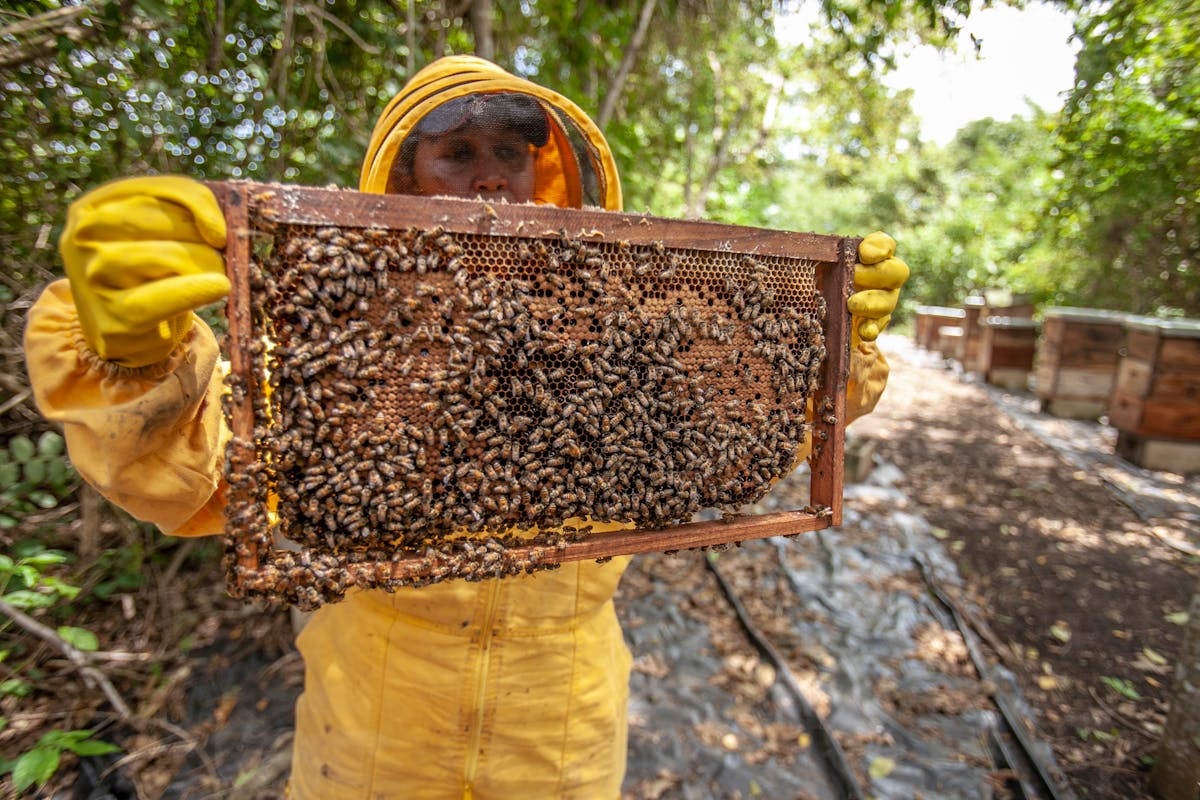
The queen is the heart of the colony. When she's performing well, everything hums along — strong brood patterns, growing population, calm bees, good honey production. But queens don't last forever, and a failing queen can drag a colony down slowly enough that you don't notice until the damage is done.
Knowing when to requeen is one of the most important skills a beekeeper can develop. Replace too early and you waste a good queen. Wait too long and you lose the colony. Here are the seven signs that tell you it's time.
The 7 Signs
1 Spotty Brood Pattern
A healthy queen lays in a solid, consistent pattern — cell after cell, frame after frame, with very few gaps. When you start seeing a shotgun pattern — scattered brood with lots of empty cells mixed in — something is wrong. Either the queen is running out of viable sperm (poorly mated or aging), she's injured, or there's a disease issue affecting developing larvae.
One bad frame isn't necessarily cause for alarm. But if the spotty pattern appears across multiple frames and persists across inspections, the queen is likely the problem. Compare her pattern to your other queens — if she's consistently the weakest, it's time to replace her.
How BeeKeeperVoice helps
BeeKeeperVoice tracks brood pattern observations across every inspection, building a queen performance score over time. Instead of relying on your memory of what the brood looked like "a few weeks ago," you have a clear record showing whether the pattern is steady, improving, or declining. The AI flags queens whose scores are trending downward so you can act before the colony suffers.
2 Declining Population
A colony's population should follow a predictable seasonal curve — building in spring, peaking in early summer, and gradually reducing into fall. If a colony is shrinking when it should be growing, or declining faster than neighboring colonies, the queen's laying rate has likely dropped. Fewer eggs means fewer new bees, and the colony can't maintain its workforce.
This is especially dangerous heading into fall. A colony that enters winter with a small population won't have enough bees to maintain cluster temperature through cold months.
3 Excessive Drone Brood
Some drone brood is normal and healthy — drones are part of the colony's reproductive cycle. But when you see large patches of drone brood where worker brood should be, it often means the queen has run out of stored sperm and can only lay unfertilized eggs. A drone-laying queen will produce a colony full of drones and no workers. This is a terminal condition — the colony cannot recover without a new queen.
How BeeKeeperVoice helps
Voice-log your queen observations in real time: "Hive 8, excessive drone brood on frames 3 and 4, no worker brood visible." The app links these notes to the queen's profile, and over time you can compare how the current queen performs against previous queens in the same hive — real data that takes the guesswork out of requeen decisions.
4 Poor Temperament Change
Did your gentle colony suddenly become hot and defensive? A change in temperament often signals a queen issue. If the original queen has been superseded and replaced by a naturally mated queen, the new queen's genetics may include more defensive traits. Or, if the colony is queenless, the lack of queen pheromone makes bees agitated and irritable.
A single cranky inspection doesn't mean much — weather, time of day, and nectar flow all affect temperament. But a persistent change across multiple inspections is worth investigating. Check for queen presence, and if the colony has requeened itself with a poorly mated or aggressive queen, replacing her will restore calm.
5 Multiple Queen Cells (Supersedure Cells)
When bees build one or two queen cells in the middle of a frame (not along the bottom edge, which is more typical of swarm cells), they're usually attempting a supersedure — a quiet replacement of a queen they've determined is failing. The bees know before you do. Supersedure cells are the colony's way of telling you the queen isn't cutting it anymore.
Some beekeepers let the supersedure proceed naturally. Others prefer to requeen with known genetics rather than leave the outcome to chance. Either way, supersedure cells are a clear sign the current queen's days are numbered.
6 Reduced Egg Laying
A productive queen in her prime can lay 1,500-2,000 eggs per day. As queens age, their laying rate drops. If you're finding fewer and fewer frames of brood during inspections — especially during peak build-up when the queen should be laying at maximum capacity — her productivity is waning. A queen that was covering 6 frames of brood last spring but only manages 3 this year is telling you something.
How BeeKeeperVoice helps
The AI compares queen performance across seasons automatically. It knows how many frames of brood this queen was producing at the same time last year and alerts you when there's a significant decline. You don't have to remember the details — the data speaks for itself.
7 Age (2+ Years)
Most commercial beekeepers requeen every year or every other year as standard practice. Queens older than two years have a significantly higher chance of failing, running out of sperm, or being superseded at an inconvenient time. Even if a two-year-old queen looks fine today, the probability of failure increases with every passing month.
This doesn't mean you must replace every queen at 24 months — some exceptional queens perform well for three years or more. But if you're seeing any of the other signs on this list and the queen is over two years old, age is working against her.
The Cost of Waiting Too Long
The biggest mistake beekeepers make with failing queens isn't misdiagnosis — it's delay. "She might bounce back." "Let's give her one more inspection." "I'll deal with it next month." Meanwhile, the colony shrinks, the brood pattern deteriorates, and by the time you finally requeen, the colony is too weak to build back up before winter.
A failing queen caught early — in May or June — gives the colony time to raise strong worker populations under a new queen before fall. A failing queen caught in September leaves you scrambling and the colony at risk.
Trust the Data, Not the Hope
Requeen decisions are emotional. Nobody wants to pinch a queen, especially one that's been with the colony since you installed the package. But beekeeping isn't about sentimentality — it's about giving your colonies the best chance to thrive. When the data tells you the queen is declining, act on the data.
The colonies you save by requeening early will thank you with strong populations, healthy brood, and boxes full of honey. The ones you don't will teach you the same lesson the hard way.
Track queen performance and catch decline early
Try BeeKeeperVoice free for a full month and let AI monitor every queen in your apiary.
Download on App Store